
Our Clients










What Determines the Right Water Pump for Your Tank and Property
Pressure Pumps and Submersible Pumps, What Each One Actually Does
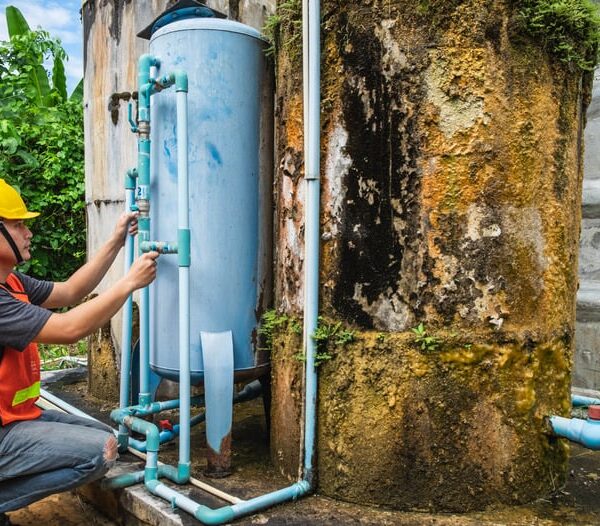
A pressure pump sits outside the tank and pushes water through your pipes to household fixtures, garden taps, or irrigation lines. A submersible pump sits inside the tank or in a below-grade pit, and suits installations where suction lift from ground level isn’t sufficient.
The pump type is secondary. What matters is the load it has to carry.
Four variables determine what your system actually needs: tank volume, the distance from tank to point of use, how many outlets run simultaneously, and whether your site has any significant elevation change. A 27,000L tank supplying a homestead 80 metres away across a Hunter Valley block is a fundamentally different load to a 20,000L tank feeding a single garden tap 10 metres from the house. Get the sizing wrong and you’ll have weak pressure at the tap, a pump that runs hot, or one that fails well before it should.
That’s the conversation we have before recommending anything. Thirty-five years of local installs is what informs it.
Pump Types Cessnock Tank Works Supplies and Installs
Pressure Pumps
The standard choice for rainwater tank installations across residential and lifestyle block properties. A pressure pump delivers consistent flow to household taps, garden irrigation, and laundry connections, and constant pressure systems handle the variable demand of everyday household use without hunting or pressure drop.
Submersible Pumps
Where the pump needs to operate below the waterline, inside the tank itself or in a below-grade sump, a submersible is the right tool. Bore pump applications follow similar logic, and those requirements are worth a separate conversation depending on your site.
High-Demand Rural Pumping
Large properties running stock water, fire suppression top-up, or supply across multiple buildings need flow rate and pressure specs that sit well beyond standard residential equipment. These systems are sized correctly before anything is ordered, not reconfigured after the pump arrives on site.
Whatever your setup, the pump recommended is the one matched to your exact load, not the easiest one to quote.
Supply and Installation Across the Hunter Valley, One Team, End to End
Cessnock Tank Works supplies and installs the full pump system. The same team that built or delivered your tank handles the connection, so there’s no gap between tank spec and pump spec, and no second contractor to chase when something doesn’t line up.
Rural and acreage blocks across the Hunter Valley rarely make things straightforward. Restricted access, uneven ground, long pipe runs, the crew handles it. As one customer put it: “Despite a difficult site to access and place my tanks the crew did a great job.”
Council requirements vary across the region and are managed as part of the installation process, not handed back to you to sort out afterwards. A customer who ran a 20,000L steel tank installation noted the team gave “great help to install our 20,000 LT steel water tank to council regulations.” Regulations do vary by council, so confirming current requirements with your local authority is always worth doing, but that’s a conversation we can help you navigate.
One call covers supply, sizing, installation, and compliance.
Custom Configurations and Tank-to-Pump Compatibility
Steel tanks built by Cessnock Tank Works are manufactured to your exact specification. Inlet positions, outlet locations, and tap fittings are part of the build conversation, decisions made before the tank leaves the workshop, not after it’s sitting on your slab. As one customer noted: “Ability to have a tank manufactured to all of your own quirky tap and inlet and outlet requirements.”
Retrofit installations on existing tanks are assessed on site first. Outlet configuration, pipe diameter, and base height all affect which pump will work, and those details are confirmed before any equipment is ordered.
Where a tank was supplied by another manufacturer, the assessment is exactly the same. Honest advice on compatibility, no assumptions, no upsell for its own sake. “Great communication, workmanship, honesty and integrity” is how one customer described working with the team.
Non-standard setups are not a problem. They’re a site visit.
Why Hunter Valley Property Owners Call Cessnock Tank Works First
Thirty-five years building and installing steel tank systems across the Hunter Valley means the team has worked every site condition, every council requirement, and every pump configuration the region produces. That’s not a marketing line, it’s the reason the same customers come back when they add a second tank or extend their irrigation.
Trades reliability is rare in this part of NSW. One customer put it plainly: “Built on time and turned up when Tony said it would. A pleasant change, a business doing what it promises.”
Every tank is manufactured in Cessnock using BlueScope Steel. The pump service carries the same direct accountability, one team, one point of contact, no outsourced components of the job.
Frequently Asked Questions
Sizing depends on tank volume, distance to the furthest outlet, how many fixtures run at once, and site elevation. These four variables interact, get one wrong and the pump underperforms or fails early. A licensed installer needs to assess your specific setup before any pump is recommended.
For most residential and lifestyle block setups, a pressure pump connected to an above-ground tank is the standard choice. Submersible pumps suit in-tank or below-grade installations. The right type depends on your tank configuration and how the water is being used, there is no universal answer.
Reduced pressure at the tap, the pump cycling without delivering consistent flow, unusual noise during operation, or failure to prime are all signs something is wrong. Any of these on a Hunter Valley property warrants an on-site assessment to confirm whether repair or full replacement is the right call.
A pressure pump draws water from the tank and delivers it at consistent pressure to household fixtures or irrigation lines. It activates automatically when a tap opens and shuts off when demand stops. This is the standard connection method between a steel rainwater tank and indoor or outdoor water use.
Yes. Pump supply and installation is handled as part of the complete tank system. The same team that manufactures and installs the tank connects the pump, with inlet and outlet positions configured to suit the property from the outset, one contact, no coordination gap.